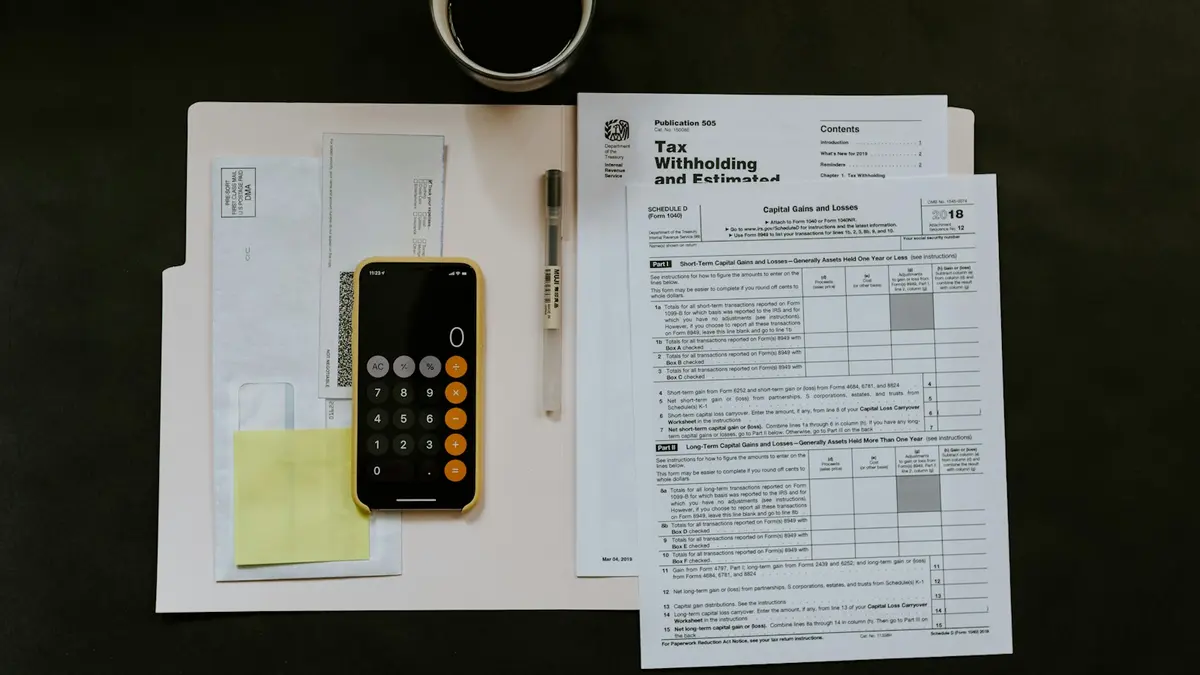
Periodic VAT return: when and how to file it?
The periodic VAT return sums up your taxable transactions. Find out who files it, how often, by which date, how to complete it on Intervat and how to avoid fines.

In brief
Everything hinges on the 20th. Each business under the standard scheme sums up its transactions in a VAT return. It files the form online, then pays the balance. This happens every month or every quarter, even with no activity.
Who files a VAT return?
Every VAT-registered business under the standard scheme must file one. That covers both self-employed people and companies. An SRL with no sales during a quarter still completes the form, with every box at zero.
Businesses under the small business exemption escape this obligation. They do not charge the tax and file no periodic VAT return. They still owe the annual listing of taxable customers. Still unsure about your scheme? Read the steps for getting your number activated.
Monthly or quarterly?
The rhythm of your VAT return mainly depends on annual turnover, excluding tax.
- Above 2,500,000 euros, monthly filing becomes compulsory.
- Below that level, a quarterly VAT return remains the rule for most SMEs.
- A quarterly filer may also opt for monthly filing.
This voluntary choice mainly suits businesses that are often in credit. An exporter who buys a lot in Belgium thus recovers the tax paid more quickly. On the other hand, it completes twelve forms a year instead of four.
Key deadlines
The deadline for each VAT return falls on the 20th of the month after the period. For monthly filers, the January VAT return therefore goes out by 20 February. For quarterly filers, remember these four dates.
- First quarter: 20 April.
- Second quarter: 20 July.
- Third quarter: 20 October.
- Fourth quarter: 20 January of the following year.
Payment follows the same deadline. The money must reach the FPS Finance account by that date. The tax authority sometimes announces one-off extensions, so check its calendar every year.
How to complete your VAT return
The form follows a simple logic in four blocks.
Box 71 shows an amount to pay. Box 72 shows a credit in your favour.
Here is a worked example. In the first quarter, an SRL invoices 30,000 euros excluding tax at 21%. It enters 6,300 euros in box 54. Its purchases of 10,000 euros excluding tax give 2,100 euros in box 59. The balance of 4,200 euros goes in box 71 and falls due on 20 April.
Filing on Intervat
Filing happens only online, through the Intervat application of the FPS Finance. You log in with your electronic identity card or with itsme. Your accountant can also file for you under a mandate.
Accounting software often generates the file for your VAT return. Still, check the amounts before sending. The software copies your data entry errors without flagging them.
Paying or recovering the balance
You pay the balance of your VAT return by bank transfer. Use the structured reference from the tax authority. A credit normally carries over to the next period. You can also request a refund in the form, under certain conditions.
Correcting a mistake
A mistake is no reason to panic. Most oversights can go into a later VAT return, through the correction boxes 61 and 62. For a significant error, your accountant should rather contact the tax authority. In practice, such a voluntary correction often limits the penalty.
Related obligations
Your VAT return comes with other filings.
- The annual listing of Belgian taxable customers, before 31 March.
- The EC sales list, monthly or quarterly, if you serve taxable customers elsewhere in the EU.
- Checking the numbers of your European customers in the VIES system.
- Keeping invoices and records for ten years.
Our guide to intra-Community trade explains the cross-border rules.
Late filing: what you risk
A late VAT return triggers a fine for each late form. Late payment adds interest. Without any filing, the tax authority may issue an assessment from its own estimates. Finally, intentional fraud exposes you to proportional fines and even criminal prosecution.
Tips for a stress-free VAT return
- Set an internal deadline in your diary, on the 10th of the due month.
- Reconcile your accounts with the declared amounts every quarter.
- Keep the tax you collect in a separate savings account.
- Hand the work to a professional if time runs short.
For that last point, here is how to find a Belgian accountant who suits your activity.
In short
Your VAT return comes back every month or every quarter, by the 20th. Fill in the right boxes, pay the balance on time and keep your records. The FPS Finance website publishes the current calendar and forms. Juristelo then builds these deadlines into your cash flow plan.
Work with your own figures
Juristelo builds your financial plan and business plan from your answers. You get a file ready for your bank.
See the Juristelo plans